Local News
Doing Nothing Is Not An Option: Glendora’s Challenge and Commitment to Its Future
By
Gary Boyer
You would think that as Mayor of a city like Glendora, getting a project done would be simple—especially when the project seemed minor. Yet for me, Gary Boyer, who served on the Glendora City Council from 2015 to 2024 and as Mayor twice, experience showed that even the smallest projects can turn into major undertakings.
One of my long-standing priorities was the siding on the annex of the La Fetra Center. At first glance, the issue appeared easily fixable—just a new paint job for aging shingles. But as council discussions continued over the years, the project kept getting postponed in favor of other pressing priorities.
When the City finally revisited the project in detail, the problem proved much larger than expected. The siding wasn’t just old—it was failing. Investigations revealed that when the annex was originally built decades ago, subpar materials had been used due to budget constraints. What was once thought to be a simple cosmetic upgrade had turned into a major repair project requiring full siding replacement.
It’s easy to look back and ask, “Why wasn’t it done right the first time?” But as I reflected, the answer was simple: the money just wasn’t there. The decision at the time had been to build within the budget available, and the City managed to get more than 40 years of service out of the facility before it required attention again.
Unfortunately, that pattern—delaying repairs year after year—extended far beyond the La Fetra Center. Glendorans have grown accustomed to leaky roofs at the library, old and insufficient facilities at the Transportation and Public Works Yards, and aging infrastructure throughout the city. These issues have persisted because there were always “more important” matters each budget cycle—and because no one had truly asked the residents what they thought should be done.
After nearly a decade on the Council, I recognized that these long-term problems couldn’t be ignored any longer. So, after retiring from public office, I began a new kind of project—listening. Conversations with residents revealed widespread concern but also a sense of frustration: everyone knew the problems existed, but no one knew where to begin. I also reached out to former City Council members, some going back as far as the 1980s, and discovered that these same issues had been debated for generations.
Realizing the community’s shared desire for progress, I helped form a citizen committee devoted to discussing Glendora’s facility challenges. Twenty residents from all corners of the city—north, south, east, and west; young and old; from across political and economic spectrums—were invited to participate in the first meeting in April 2025. Twenty-four people showed up, eager to contribute. One thing became immediately clear: doing nothing was not an option.
The late Lois Shade, who served as Mayor of Glendora in the 1980s, had coined an acronym that perfectly fit their mission: FROG—Facilities Restructuring of Glendora. The name brought a lighthearted touch to an otherwise serious endeavor.
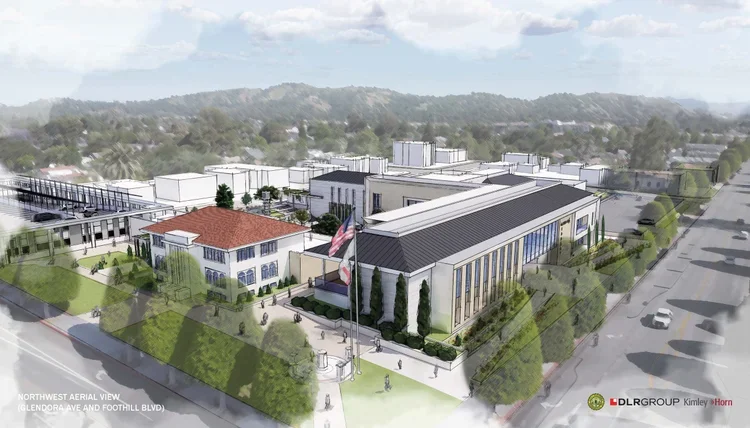
One of FROG’s first actions was to tour the city’s facilities. What we found was sobering. Roof leaks plagued the library and City Hall. The Police Department was far too small for current needs. The La Fetra Center’s siding was deteriorating. The Transportation Yard housed offices in old sheds, and even the long-abandoned Texaco gas station—moved in the 1990s to the Public Works Yard—was still being used.
City staff had done an admirable job maintaining operations and masking the problems with quick fixes, but the truth was clear: Glendora’s infrastructure desperately needed investment.
Over the months that followed, the committee held passionate debates about potential solutions. Outsourcing city services was discussed, but the community’s preference for local control made that idea untenable. Trying to fund upgrades through small annual budget allocations would take decades. Selling land or rezoning parts of the city for dense development was quickly dismissed. Even grant options were limited, as Glendora didn’t meet many of the criteria for large-scale funding programs.
Eventually, one possible—and difficult—solution remained: a local tax measure.
After eight months of meetings and countless community conversations, the FROG committee reached a consensus. The group is now sponsoring a Parcel Tax Measure that will appear on the November 2026 ballot. To qualify, the measure will require about 4,500 resident signatures.
The proposed tax would be assessed at 19 cents per square foot for residential properties, with a slightly higher rate for commercial properties. The goal is simple but profound: to invest in Glendora’s future, ensuring that essential public facilities serve residents for the next 50 to 100 years.
Ultimately, this initiative isn’t just about buildings—it’s about community pride, transparency, and accountability. The residents of Glendora deserve safe, functional public spaces. They deserve a City that plans for the future instead of patching the past. And now, they have the power to shape that future together. For more information or to help, please visit our web site at www.Glendora2026.com .
Doing nothing is not an option.