Japanese Incarceration, Still Speaking
By
Kimberly Gutierrez
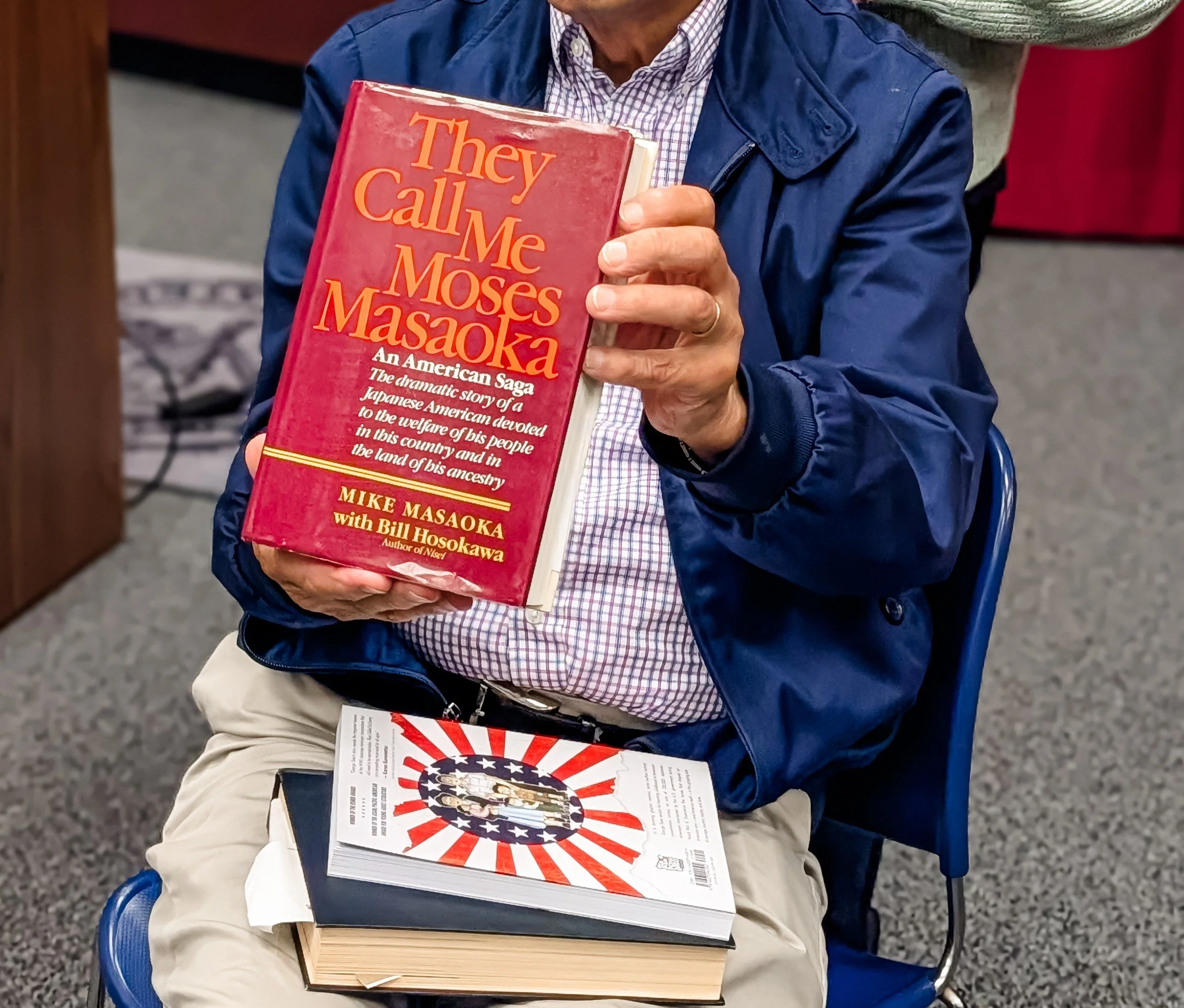
“No Japs Allowed" posters, hand-painted with white hot fire by entitled people on stolen land, burns across the big screen A palpable discomfort sears through the room. For each body present, a different but unmistakable and in-sync spine-stiffening is obvious. A Thousand Stories: Explore the WWII Japanese American Incarceration, an event barely promoted by our city, begins. I have a right-now look in the rearview and I'm fully immersed.
Guest speaker Jim Nakano tells his story about surviving a Japanese prison camp during WWII, then welcomes discussion.
The Nisei speak of their experience with a gentle calm—mix of defeat and perseverance and healing. The Sansei speak with electric pulsing nerves—pieces stolen from their parents were pieces they never got to hold: physical things, and traditional things, and spiritual things. Both generations are here together, but with a bond edited by white America and different than cosmically intended. I wonder how each generation molds a shared anger into different shapes? Do they stand back and see wildly different shapes or are their works more similar than they realize? Maybe both and probably they do realize.
A 98-year-old white woman from Indio, California shares her story about the white neighbors who maintained local Japanese-operated farms when the Japanese were forcibly removed. I wonder if those neighbors loudly protested Executive Order 9066? Did the government see and hear their white objection? Or did these neighbors accept more land and more crops, profiting with greedy hands and hungry bank accounts? After the war, did these neighbors give back, in full, the land owned by Nisei or rented by Issei? I'm skeptical, and that feeling of icky knowing settles in.
To my disappointment, the median age of attendees was around 60 years young. I was beyond humbled to be, as Lin-Manuel Miranda put it, "in the room where it happened," but truly bummed that my generation, and those following me, seem so willing to let time swallow our still living history.
I have this need, and, to some, an only mildly worthy curiosity, to lookback for more. I have to know how the survivors, whose literal voices I will remember always, feel about the current violence against Brown bodies in our country. How do they feel about red, white, and blue-educated white people preaching at Japanese, Native, and Black people that they should do more because of their lived experiences? How do they eat, sleep, and breathe on this land among people who catapulted them into struggle? How do they forgive every day? Then a moment of self-realization hits. Expecting survivors to give me trauma-doused pieces of themselves is a behavior I'm responsible to unlearn and the answers I want are my job to discover.
Before I am ready, the lecture is over and my time with tangible history is done. I look around and notice a shift- painful experiences seem less burdensome to survivors once their stories live on together. I pack my notes and hope I get another chance to hear more.
I have to look back. You should come, too.